
Garage floor concrete in Oceanside CA - a slab built to carry your cars
Cracked, sinking or dusty garage floor? We dig out, pack the base and pour a new slab that's ready for your cars.
- Licensed and fully insured.
- Free on-site estimates.
- Expect a reply within 1 business day.
What does replacing a garage floor slab in Oceanside involve?
Garage floor concrete is a new slab for your garage in Oceanside. It's poured at the thicker end of what home floors use and usually reinforced with rebar or wire mesh, steel set inside the concrete to hold it together, because it has to carry your cars. The job often includes tearing out the old floor and fixing the dirt and drainage underneath it.
Most people call because the old floor is cracked, sinking or shedding dust, or because they want to turn a dirt or gravel garage into a real one. The price mostly turns on the size of the garage, whether an old slab has to come out, how much work the base needs and how the slab is reinforced. The schedule turns on what the city requires, the weather on pour day and the cure, which keeps your cars off the floor longer than the pour itself takes. My written estimate spells out each of those for your garage, so you know what you're paying for before we start.
How can you tell your garage floor needs replacing?
Cracks that keep widening
Hairline cracks show up in most slabs, but cracks that keep opening, or one side that sits higher than the other, usually mean the base underneath has moved. If you wait, water gets in under the slab and the pieces keep shifting, and a repair you could have patched turns into a tear-out.
Water pooling by the door
Puddles that sit in the garage or run toward the house usually mean the floor has settled or was never sloped to drain. The longer that water sits, the more it softens the dirt under the slab, and the faster the slab sinks.
Dusty, chipping surface
If the top powders when you sweep or flakes where the tires sit, the concrete was likely too wet or poured in the heat. It won't heal on its own, and the wear spreads wherever you park.
Work that often goes with a garage floor
Decorative concrete
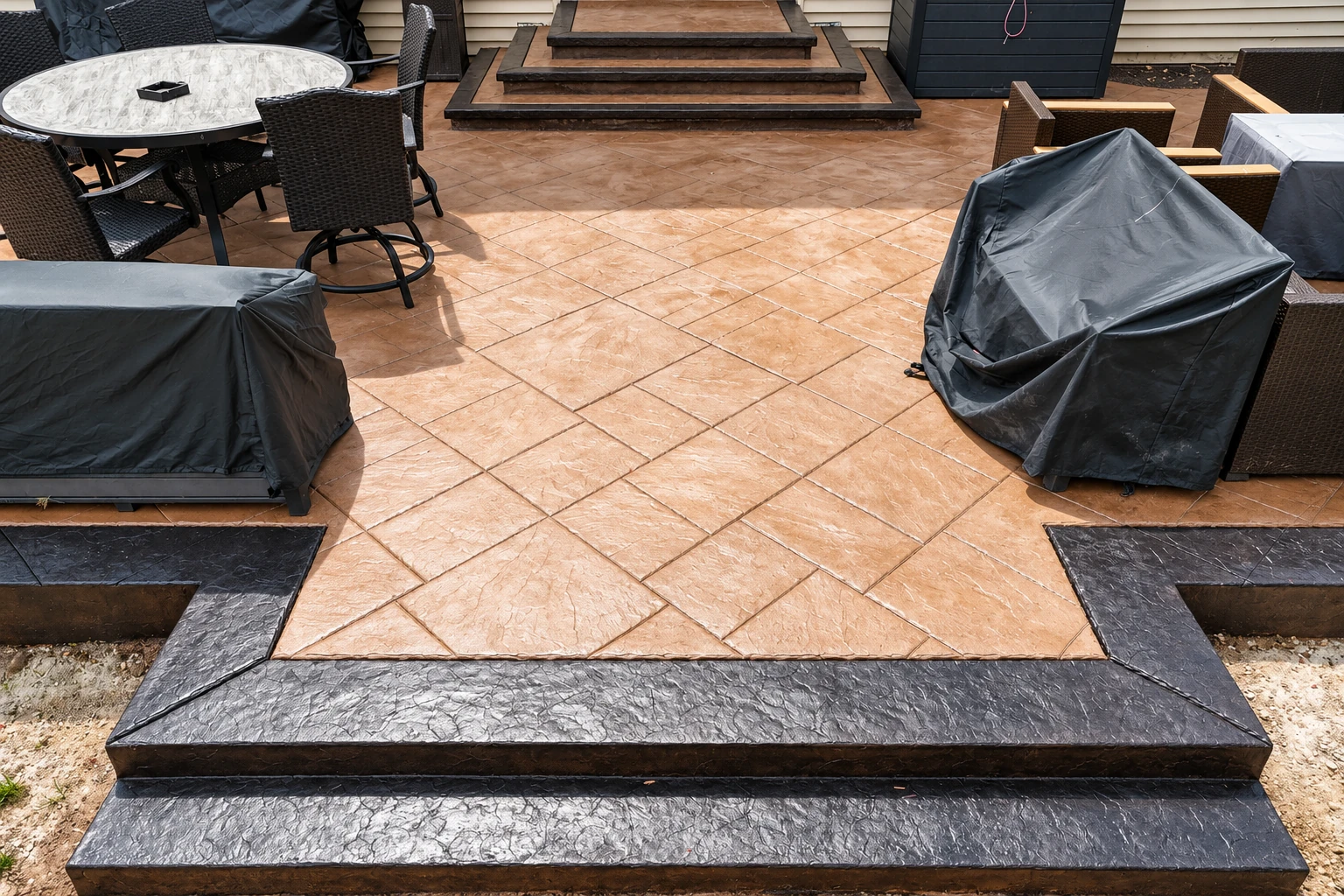
If the garage doubles as a gym or a shop, a colored or textured finish can make the floor feel like part of the house.
Concrete retaining walls
When the driveway or yard slopes down toward the garage, a retaining wall holds the soil back and keeps dirt and runoff off the new slab.
How we pour a garage floor slab
If there's an old slab in the way, I put its removal on the estimate as its own line, so that cost is clear from day one. We break it out and haul it off, then dig down to the subgrade, the dirt the slab sits on, and pack it firm, because a base that's only raked level settles with the dirt and takes your floor with it. Before the pour we check where the water runs, so the floor falls toward the door and not toward the house. We set the steel, pour early in the day instead of in midday heat, which leaves a weak, dusty top, and keep the water in the mix down even though a wetter mix is easier to spread. Then we cut control joints, shallow grooves that give the slab a straight line to crack along, and let it cure, the wait while the concrete hardens before it takes weight. If the budget's tight, cut the finish before you cut the base, because nobody sees the base on day one, but it's what decides whether your floor holds up under the cars.
While we're on site, it's often the right time to deal with what's around the floor. Some people want more than plain gray, so we can work in decorative concrete with a color or texture you pick. On sloped lots, where the ground beside or behind the garage pushes in, we'll talk about concrete retaining walls at the same visit, so the grading and the slab get planned together.
Smooth troweled finish
A tight, slick surface sweeps clean easily and takes an epoxy or other coating well, so it suits a garage that doubles as a shop. The trade-off is that it can get slippery when wet tires roll in.
Light broom finish
We drag a broom across the fresh concrete to leave fine lines, a texture that gives tires and shoes some grip. It's the better pick if water often comes into the garage, though it takes a little more effort to sweep.
Get a written estimate for your new garage floor
Send the form and we'll reply within one business day to set up a free on-site estimate, with no obligation. A call to (760) 400-7009 works too.
Call (760) 400-7009Why Oceanside homeowners call Groundwork Oceanside Concrete for garage floors
The owner writes every estimate
I come out to look at every job myself and write the estimate, then run the site alongside our crew of finishers and laborers. The person who told you what your floor needs is the one watching the base get packed.
In business since 2023
I started out pouring walkways and small patios for neighbors on weekends, and those jobs turned into this business in 2023. I learned next to finishers who'd been at it longer than me, which is why I care most about the base, the water and the cure.
Licensed and fully insured
We're licensed and fully insured for the concrete work we do. That's worth asking any contractor about before they start digging in your garage.
There for every inspection
Oceanside requires the owner, the licensed contractor or an employee of either to be at every inspection. When your job has one, I meet the inspector myself, so you don't have to take time off to be home.
If your garage floor is cracking, sinking or holding water, send us a request and I'll come out to see it.
What happens after you call about a garage floor
Call or send the form
Tell us a little about the garage and the floor you have now. We'll set a time for me to come out and see it.
I look at the garage
I check the old floor, the ground and where the water goes, and tell you on the spot what I'd do and why. Then you get a written estimate you can compare line by line against anyone else's.
We sort permits and prep
Once you say go, we sort out what the city needs and prep the site, digging out and packing the base. We set pour day around the weather, because I'd rather wait for a better day than pour in the wrong conditions.
Pour, cure and clean up
I run the job through the pour, the joint cutting and the cleanup. Before we leave, you'll know when you can walk on the floor and when it can take your car.
Common questions
How much does a new garage floor cost in the San Diego area?
A concrete slab in the San Diego area usually costs about $6 to $13 per square foot, as a general guide for slabs and not our price. Reinforcing it with rebar or wire mesh pushes it toward the higher end, and removing an old slab is added on top. Our written estimate breaks out each of those for your garage.
How long does a new garage floor take to cure before I can park on it?
You can usually walk on a new slab within 48 hours, and it takes about a month to fully cure. The usual advice is to keep cars and other heavy loads off it for a week to be safe. Plan ahead for where the cars and whatever's stored in the garage will go that week.
Do I need a permit to replace a garage floor in Oceanside?
Check with the city before assuming you don't, because Oceanside's building official issues the permit for work that builds, alters, repairs or demolishes a building or structure. The city only confirms an exemption through its written Permit Exemption Form, and Building Division staff won't confirm one verbally. One reason the city gives is that its engineering, fire, planning and water departments may have their own permit questions.
Who can get the permit for garage floor work in Oceanside?
Oceanside issues building permits only to California licensed contractors of the right classification, or to owner-builders who own the property and act as their own general contractor. On a home, an owner-builder needs to have owned the property for the last 12 months, and the city's building permits page covers how to apply. When a permit is called for, we pull it as the licensed contractor, or walk you through it if you're building as an owner-builder.
What causes a garage slab to sink or settle?
Slabs usually settle from poor drainage, plumbing leaks under the slab, tree roots drawing moisture out of the soil, or dirt that wasn't packed well when the slab went in. Most mapped soil in San Diego County rates low for shrink-swell, the way some clay swells when wet and shrinks when dry, but some of it rates high or very high. That's why it pays to ask anyone quoting your floor how they'll compact and drain the base.
Will a new garage floor crack like my old one?
It doesn't have to, if the base, the water in the mix and the joints are done right. Hardened concrete shrinks in direct proportion to the water in the mix, so a wetter mix shrinks more, and it's fair to ask any contractor how much water they'll use. We also cut the control joints on time, so any cracking follows the lines we chose.
Get your garage floor estimate started
Call (760) 400-7009 or send the form with your garage size in square feet and whether an old slab has to come out, so I can plan the visit.