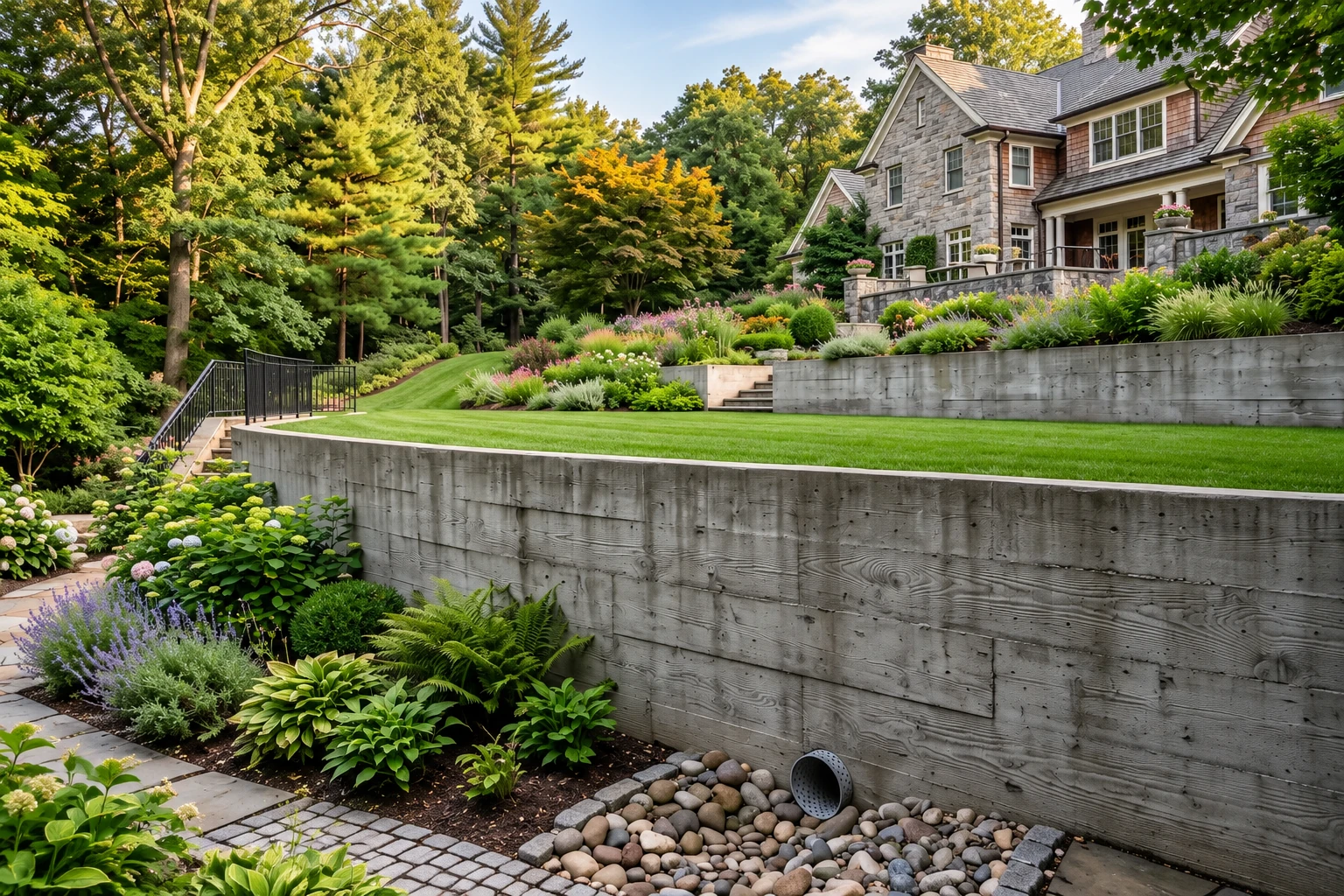
Concrete retaining walls in Oceanside CA - a wall that drains and holds the hill
Slope creeping onto the patio or an old wall leaning out? We plan the drainage first and pour a wall built for your ground.
- Licensed and fully insured.
- Free on-site estimates.
- Expect a reply within 1 business day.
What does a concrete retaining wall job involve, from soil and drainage to permits?
A concrete retaining wall is a poured wall that holds back a slope so you get level, usable ground, and at Groundwork Oceanside Concrete we form, pour and finish it on site in Oceanside, usually along with the drain behind it and the grading around it.
Most calls start with a slope dropping mud onto the patio, a yard too steep to use, or an old wall that's begun to lean. The price moves with the wall's height and length, what the soil behind it is made of, how much water we have to manage and how easy the site is to reach. The schedule turns mostly on what the city needs to approve before we dig, so we check that for your wall before we start, and the written estimate lays out the rest.
How do you know your slope or wall needs work?
Wall leaning or bowing
If the top of the wall is tipping out or the face is bulging, the soil behind it is pushing harder than the wall can take, often because water is trapped back there. Leave it and it keeps moving, and a repair turns into a tear-out.
Mud washing onto hardscape
A bare slope that dumps dirt on your patio, walkway or driveway after rain is losing ground every storm. Each one cuts a little deeper, and the slope gets harder and pricier to hold back.
Cracks with wet stains
Cracks with damp marks or soil seeping through usually mean water is sitting behind the wall with nowhere to go. Wet soil is heavier and weaker, so the problem tends to speed up once it starts.
Work that often goes with a wall
Concrete floor installation
Once a wall turns a slope into flat ground, that new pad can take a concrete floor for a shed, studio or workshop.
Concrete pool decks
Pools on hillside lots often need a wall to hold the yard back, and the deck around the pool should drain away from both.
How we build a concrete retaining wall
With a wall, I think about water first, because a wall that can't drain is fighting the hill behind it. So before I put a price on it, I look at what the slope is made of and where the water runs, and we plan the drainage along with the wall. On the job we dig the footing down to firm ground, set the forms and the rebar, the steel inside that keeps the concrete from pulling apart under the push of the soil, and pour. Then we let it cure, the wait while the concrete gains strength, before we backfill behind it with the drain in place. If the budget's tight, I'd spend it on the footing and the drain nobody sees, not on a fancy face, because a plain wall that stays put beats a good-looking one that leans.
A wall is often what makes the rest of the yard possible. Once the slope is held back, the flat ground can take concrete floor installation for a shed or studio, and on a hillside lot with a pool, we plan the wall and the concrete pool decks together so water from both ends up somewhere safe.
Low planter or terrace wall
Suits a gentle grade where you want a raised bed or a flat strip of yard. It's a smaller job, but it still needs a drain behind it so the soil doesn't push it out of line.
Full wall holding a slope
Suits a steeper hill or a cut into the yard where real weight sits behind the wall. The footing, rebar and drainage do most of the work here, and the soil decides how much of each it needs.
Plain or textured face
A smooth or plain formed face keeps the cost down, while a textured or decorative face costs more and suits a wall that's on show. The structure behind it is the same either way.
Get a free on-site estimate for your retaining wall
Send the form and we'll reply within one business day to set a time for me to come look at the slope. There's no obligation, and calling (760) 400-7009 works too.
Call (760) 400-7009Why Oceanside homeowners call Groundwork Oceanside Concrete for retaining walls
I look at every slope myself
I come out to every job, check the soil and the water, and write the estimate myself. You get the answer from the person who'll run the job, not a salesperson.
Soil checked before the price
Some San Diego area clays can swell a lot and lose strength once they've moved, so I look at what your slope is made of before I price a wall. A wall priced without that is a guess.
On site from dig to cleanup
I run the site and work alongside our crew of finishers and laborers. The person who planned your drainage is there when it goes in the ground.
Licensed and insured on every job
We're licensed and fully insured. If something goes wrong on your property during the work, you're not the one left carrying it.
On a wall, the part that matters most is the footing and the drain behind it, and I'd rather wait or tell you no than cut corners there. Tell us about your slope and I'll come take a look.
What happens after you call about a retaining wall?
Call or send the form
Call (760) 400-7009 or send the form, and we'll get back to you to set a visit. Photos of the slope and any wet spots help me come prepared.
I walk the slope with you
I come out myself, look at the soil and where the water goes, and tell you on the spot what I'd do and why. Then I send a written estimate you can compare line by line, so you see what's driving the cost before you decide.
We get the plans approved
Once you say go, we sort out what the city needs. In Oceanside the plans are approved before work starts, so that review belongs on your calendar ahead of the dig.
We build, inspect, clean up
We prep the site and I run the job through to cleanup. The city inspects during construction to check the work against code and the approved plans, so we schedule around those visits.
Common questions
Do I need a permit to build a retaining wall in Oceanside?
Most likely, yes, because the City of Oceanside says most construction work needs a building permit, and grading or other changes to private property can trigger one too. The city keeps a list of the work that's exempt, and you can ask for it while you plan. When a permit is called for, we pull it, handle the paperwork and meet the inspector.
How much does a concrete retaining wall cost in the San Diego area?
Installing a concrete retaining wall in the San Diego area usually costs about $20 to $50 per square foot, so treat that as a starting range, not our price. One local price report covers a poured wall about 3 feet high and leaves out removing an old wall, extra height, terraced or curved designs, decorative concrete and landscaping. Your own number comes from the written estimate after I've seen the slope.
Who can pull a building permit for a retaining wall in Oceanside?
The city issues building permits only to California licensed contractors in the right classification, or to owner-builders who've owned a residential property for the last 12 months. The state describes a concrete contractor as one who forms, pours, places, finishes and installs concrete work, so it's fair to ask any contractor which classification they hold. If you're building as an owner-builder, we can walk you through it.
How does water affect a retaining wall?
Water adds load to a retaining wall, can wash out soil at its base and weakens the ground around it. A trade guide advises sending water away from the wall whenever you can, because good drainage takes load off it. Ask any contractor how their plan moves water away and which drainage parts it uses.
What is the best way to choose a retaining wall for my soil?
Start with how firm your ground is, because that shapes both the design and the budget. Highway design guidance from Wisconsin says cantilever walls, the poured kind that sits on a wide footing, suit firm ground that can carry the weight, and where the ground is soft or settles they may need piles or foundation work, which adds a lot of cost. A study after several earthquakes also found that segmental block walls can hold up better than conventional walls when they're properly designed.
Does building near the coast in Oceanside change how a retaining wall gets approved?
It can, because inside California's coastal zone, development generally can't start until the Coastal Commission or the local government issues a coastal development permit, and development is defined broadly. When the city asks for added plans, like an improvement, landscaping or storm water plan, licensed professionals prepare them, and the city asks owners to talk with its Engineering Division staff before they start planning. We're based in Oceanside and work across San Diego County and south Orange County, so we help owners sort out these questions early.
Get your retaining wall estimate started
Call (760) 400-7009 or use the form with the wall's location, rough length and height, and a few photos of the slope and any drainage trouble, so the first visit gets straight to what your wall needs.