Concrete driveway building in Oceanside CA - a slab that drains away from your house
Cracked, sinking or pooling driveway? We dig out, pack the base and pour a new slab with the joints and water planned first.
- Licensed and fully insured.
- Free on-site estimates.
- Expect a reply within 1 business day.
What goes into building a concrete driveway, from tear-out to parking on it?
Concrete driveway building in Oceanside means forming, pouring and finishing a new concrete slab for your cars on ground we've dug out and packed, so it spreads the weight and holds its shape through the summer heat. At Groundwork Oceanside Concrete it often comes with tearing out an old driveway, and sometimes a walkway or patio poured in the same visit.
Most calls I get are about a driveway that's cracked, sunk or holding water, or a dirt or gravel pad you're done living with. The price moves with the size, whether there's an old slab to break out and haul off, how much soft dirt has to come out and get packed, the thickness and the finish. The schedule turns on the prep, the weather on pour day, the cure before you can drive on it and whatever the city needs first, which we check before we start. After I've seen it, you get your own number in a written estimate.
How do you know your driveway needs replacing?
Cracks that keep spreading
Cracks that wander across the slab or open wider each year usually mean the ground underneath moved or the joints were never cut where they should be. Patching buys a little time, but water gets into the cracks and washes out more of the ground below.
Sections sinking or tipping
When one section drops below the next or tips toward the garage, the dirt under it settled, usually because it was raked level instead of packed. The longer it goes, the bigger the trip edge gets and the more it can steer water back at your house.
Water pooling after rain
Puddles that sit at the garage door or along the edges mean the slab doesn't slope the way it should. Standing water soaks the ground below and chips the surface, and over time that's what turns a few cracks into a full tear-out.
Work that often goes with a driveway
Concrete patio construction
If your patio is cracked or you've always wanted one, pouring it while we're set up for the driveway saves a second setup and a second mess.
Stamped concrete services
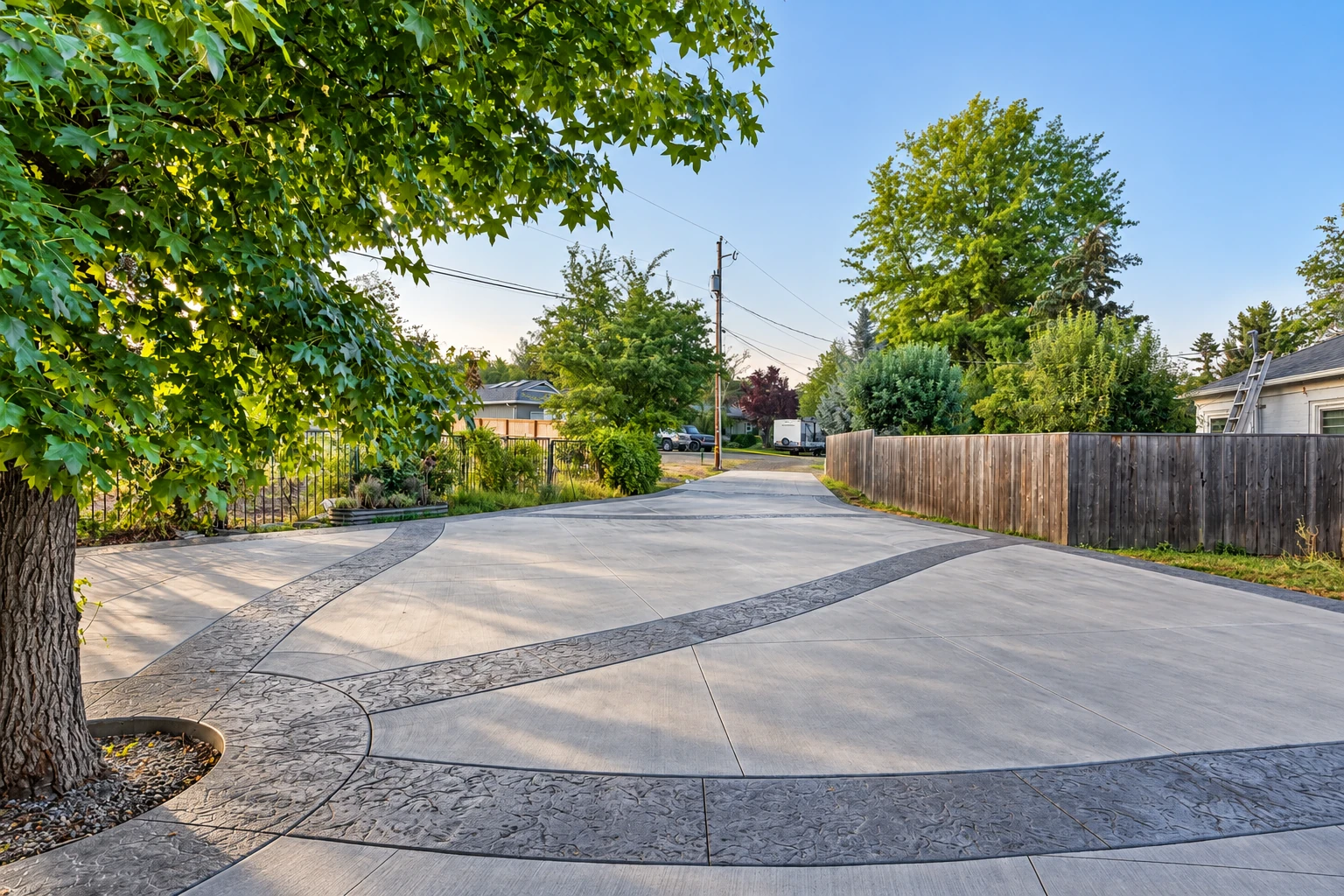
When the driveway is the first thing people see, a pattern and color can make it look like stone, brick or tile instead of plain gray.
How we handle concrete driveway building
Most people are weighing concrete against asphalt, so I start there, with what each costs over the years and what you'll be parking on it. Then I check where the water runs now, because a slab that tips toward the house sends every rain at your garage. On the job we break out the old surface and dig out roots and soft dirt down to firm subgrade, the ground the slab sits on, then pack it, since a base that's only raked level settles with the dirt and takes the concrete down with it. Many western states have soil that swells when it's wet, and the usual guidance there is a crushed rock base sized to how much it swells, with a soils engineer called in when nobody's sure. We set the forms sloped away from the house, lay rebar, the steel inside that keeps a crack from pulling apart, and pour early, because midday heat can leave a weak, dusty top. The slab gets a broom finish, a light texture so tires and shoes grip, then control joints, the cuts that give cracks a straight line to follow, made on time so the cracks land where we picked. Last comes a proper cure, the wait while it gains strength before anyone uses it. Our written proposal shows where every joint goes and where the water ends up. If the budget's tight, I'd cut the fancy finish before I'd cut the base, because the base is what nobody sees on day one and what decides how the slab holds up.
A driveway is flatwork, any slab poured flat on the ground, so it often makes sense to do the other flat pieces while the crew and the trucks are already here. A lot of homeowners add concrete patio construction out back in the same visit, and if you want more than plain gray, our stamped concrete services add a pattern while the surface is still soft.
Broom-finished concrete
This suits most homes, because it's the simplest slab to build and it keeps its grip in the rain. If the budget is going into the base, this is the finish I'd pick.
Stamped or colored concrete
This suits homes where the driveway is a big part of the view from the street and you want it to go with stone or brick on the house. It costs more and needs resealing over the years, so it's worth it when the look really matters to you.
Get a written estimate for your concrete driveway
We'll reply within one business day to set a time, then I come out, look at the driveway and send a written estimate. It's free, with no obligation, and you can call (760) 400-7009 instead.
Call (760) 400-7009Why Oceanside homeowners call Groundwork Oceanside Concrete for a new driveway
I look at every job myself
I come out to see every driveway and write the estimate myself, then run the site and work alongside our finishers and laborers. The person who told you what the job needs is the one making sure it gets done that way.
Licensed and fully insured, shown upfront
We're licensed and fully insured, and we'll show you both before you sign. That way you know where you stand before anyone breaks ground on your property.
We handle Oceanside's storm water review
In Oceanside, every project applying for a city permit gets a storm water review before it's submitted, and driveways become a priority category once the whole site adds or replaces 5,000 square feet or more of paving. We check where your job falls, pull any permit as the licensed contractor and meet the inspector, or walk you through it if you're building as an owner-builder.
Learned the trade on real jobs
I started pouring walkways and small patios for neighbors on weekends and turned it into this business in 2023, learning next to finishers who'd been at it far longer. We're known for a fast callback and a straight answer, even when that answer is to wait for a better day to pour.
On a driveway, what counts most is what's under it and where the water goes, so send us your driveway details or call (760) 400-7009 and I'll come take a look.
What happens after you call about a driveway?
Call or send the form
Call (760) 400-7009 any day from 7 AM to 11 PM, or send the form, and we'll get back to you to set a time for me to come out.
I walk the driveway with you
I tell you on the spot what I'd do and why, then send a written estimate you can compare line by line against anyone else's. It shows your price, where the joints go and where the water ends up.
We permit, pour and clean up
Once you say go, we sort out what the city needs, prep the site and pour, and I run the job through to cleanup. Before we leave, we tell you when it's ready for foot traffic and when it's ready for cars.
Common questions
How much does a two-car concrete driveway cost in Oceanside?
In the San Diego area, a two-car concrete driveway of 400 to 600 square feet usually costs about $2,600 to $7,700 for the whole job. That's the going rate around here, not our quote, and your written estimate gives you your own number.
Is concrete or asphalt better for a driveway in Oceanside?
Concrete costs more up front but routinely lasts decades, while asphalt needs seal coating every so often and wears out faster. With concrete, upkeep is mostly the joints and an occasional seal, so you're trading a higher first price for less work later. If you plan to stay a while or park anything heavy, I'd lean concrete.
How long does a new concrete driveway need to cure before I can park on it?
Plan on about 7 days before you drive a car on a new driveway, and closer to 28 days for heavier trucks and RVs. Running a heavy load over it early is how a new slab gets cracked before it's strong. Line up street or neighbor parking for the first week, and longer if you have a truck or RV.
How thick should a concrete driveway be if I park a truck or RV?
Four inches is common for regular cars, and 5 to 6 inches is common for heavier loads or poor soil. One concrete guide figures that going from 4 to 5 inches adds about 20% to the concrete cost and nearly 50% to the weight the slab can carry. If you park a work truck, a boat or an RV, ask me about a thicker slab when I'm out.
What is the best way to keep a new concrete driveway from cracking?
Start with a dug-out, packed base, joints cut on time and an isolation joint wherever the driveway meets another slab. An isolation joint is a flexible strip that lets the driveway and the garage floor, sidewalk or other pavement move on their own, so one doesn't crack the other. Concrete can still crack, but a good jointing plan keeps it in lines you chose, so ask any contractor to show it in the written proposal.
Who is allowed to build a concrete driveway in California?
A contractor licensed by California's Contractors State License Board should build it, since the board licenses concrete contractors for forming, pouring and finishing flat concrete and pavement. The small-job exception only covers work under $1,000, and even then not when the work needs any permit or the person hires workers. A driveway is usually well past that, so ask to see the license before you sign.
Get your new driveway on the schedule
Have the rough size, what's on the ground now and what you park ready when you call (760) 400-7009 or send the form, so the first visit gets straight to what your driveway needs.